

As a manufacturer, I spend a great deal of time thinking about the economic and political forces that will shape our business and our markets in the quarters and years ahead.
Global competition, economic uncertainty, trade policy, geopolitics and the march of technology all matter. But these are not the things that keep me up at night. What keeps me up at night is whether we will be able to find the engaged, hard-working, and skilled people we need not just tomorrow, but in five, 25, 50 years from now.
It is natural to take this long-term view in a family business. As a shareholder, board member and executive at Ellwood, I think about what we must do today so the company—and the communities where we operate that depend on us and fellow manufacturers—remains strong for generations to come.
Manufacturing is critical to our regional economy. Most importantly, it provides careers with family-supporting compensation, comprehensive benefits, valuable skills and genuine upward mobility.
An individual can enter manufacturing through a co-op, apprenticeship, technical program or entry-level position and build a lifelong career, without taking on the debt associated with a four-year degree. The industry “exports” products and brings revenue dollars into our region, generates tax revenue and supports a broad network of suppliers, contractors, transportation providers, utilities and professional services.
Manufacturers make significant long-term capital investments in our communities, while our employees support local businesses, neighborhoods and public services through spending and tax contributions. Manufacturers contribute significantly to regional philanthropy. When manufacturing thrives, the benefits extend well beyond our plants.
And the impact of our products is much more important and exciting than many people realize.
In western Pennsylvania and eastern Ohio, manufacturers across an extraordinary range of industries—from steel, aluminum, plastics and other materials to fabricated products, machinery, and consumer goods to name just a few—support sectors such as aero, space, defense, energy, transportation, construction, healthcare, and more.
Our operations combine skilled trades and engineering, automation, robotics and AI, complex problem-solving and cross-functional team work to make products that make life around the world safe, comfortable, productive and innovative. When you appreciate the critical impact of the products you produce every day, you can’t help but be proud of and engaged in your work.
Yet too many students and parents still picture manufacturing as dirty, boring, outdated and at a dead-end. We have done young people a disservice by failing to show them what they can accomplish in manufacturing and how important it is. We need more “wow” moments that allow students to see the technology, teamwork and purpose behind products made in their own communities. The April launch of the Artemis II mission by NASA was one such “wow” moment. Truly a representation of the engineering and manufacturing might of America. And did you know the supply chain for this rocket included many small, medium and large manufacturers from right here in our region?
Manufacturers must lead. We need to continue to open our doors, invest our time, help shape curriculum and create meaningful work-based learning opportunities. But workforce development cannot be the responsibility of manufacturers alone.Parents, coaches, counselors, educators, government, workforce organizations and the broader community must participate.
I am gratified to see a shift recently back towards an appreciation for the value of a technical education. But we have much ground to make up; ground we gave up in the last 30 years as we, as a society, pushed our youth toward expensive college educations no matter what.
The Wilmington Area School District’s Agriculture Program is a strong example of what forward-thinking education can look like. The program connects agriculture with hands-on manufacturing, robotics, welding, electrical, CNC machining, 3D printing and more. Students apply classroom learning to real projects and gain exposure to local employers with career-focused outcomes. Five program students worked at Ellwood during their senior year 2025-26; three accepted full-time positions with us after graduation. We need more programs like this.
A strong manufacturing workforce is a public good. It supports families, strengthens the tax base, sustains local businesses and gives young people reasons to build their lives here at home. We all share a responsibility to support the development of tomorrow’s manufacturing workforce. Thank you for your support.
—
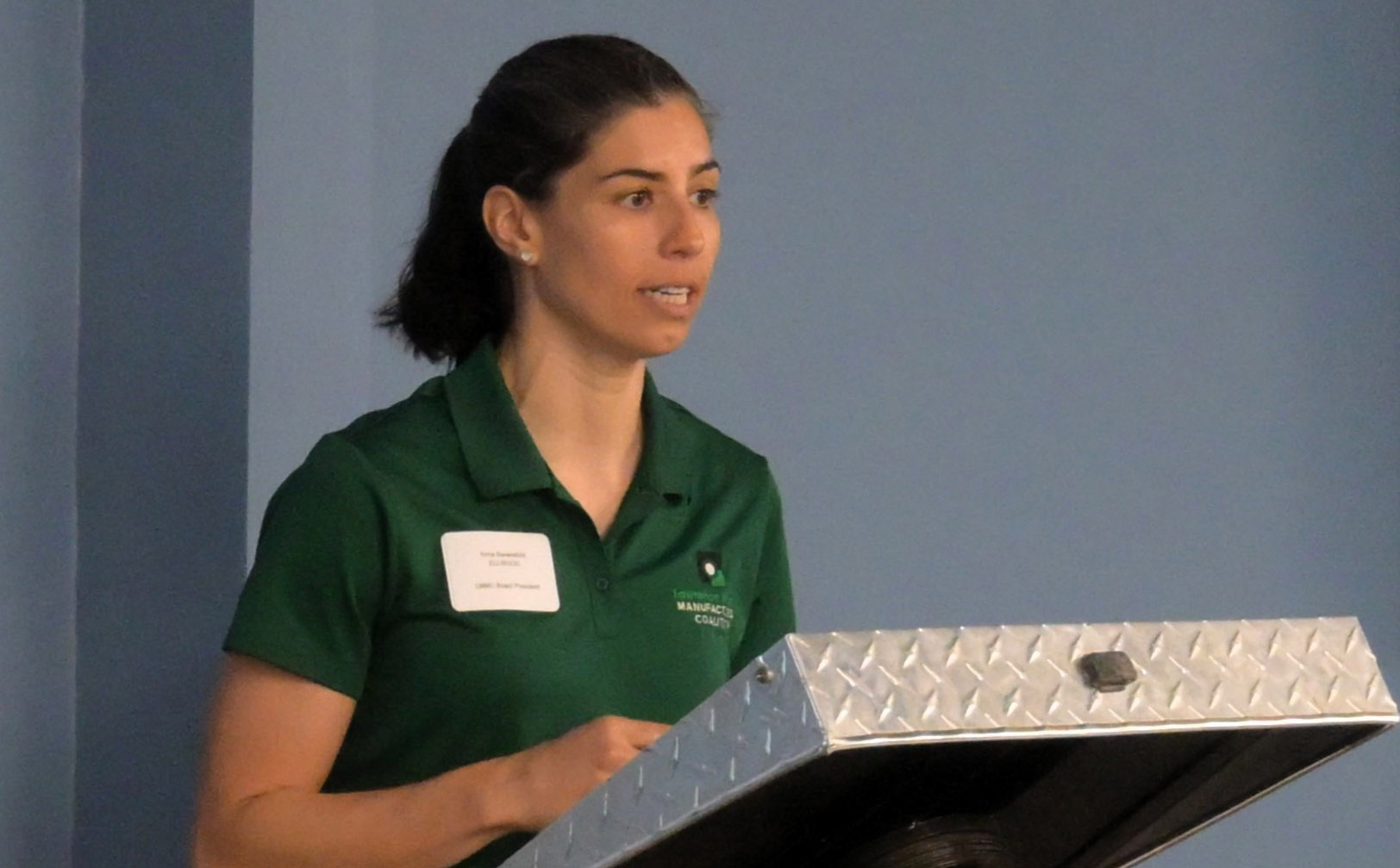
Anna Barensfeld is Vice President of Strategic Initiatives and a shareholder of Ellwood, a family- and American-owned manufacturer of specialty metals, forgings, and engineered and finished components. She is co-founder and President of Lawrence Mercer Manufacturers Coalition (Ellwood is also a member of Mahoning Valley Manufacturers Coalition).

